Retractable Awning vs. Pergola: 7 Differences Washington Homeowners Should Know
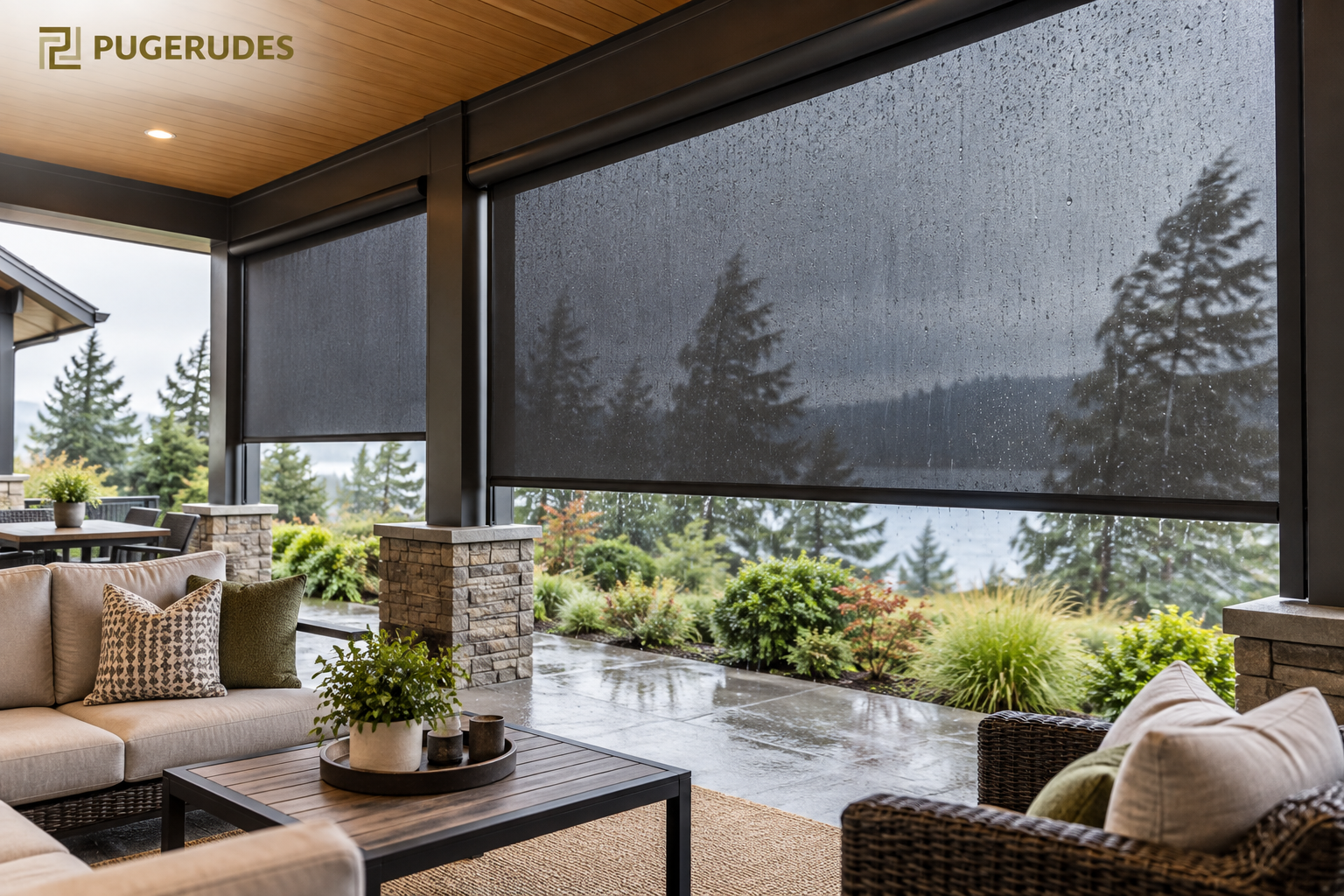
A comfortable patio in Washington needs to work with changing conditions. One afternoon may call for shade from the bright summer sun, while another may make you want an open view of the sky. Then there are the wetter months, when homeowners naturally start thinking about how much protection an outdoor structure can realistically provide.
At Pugerudes, we help Washington homeowners find outdoor living solutions that fit the way they actually use their homes. When comparing a
retractable awning vs pergola, the right answer is not simply about which one looks better. It comes down to how much flexibility you want, how your patio is designed, how much maintenance you are comfortable with, and what you expect your outdoor space to do throughout the seasons.
What Is the Difference Between a Retractable Awning and a Pergola?
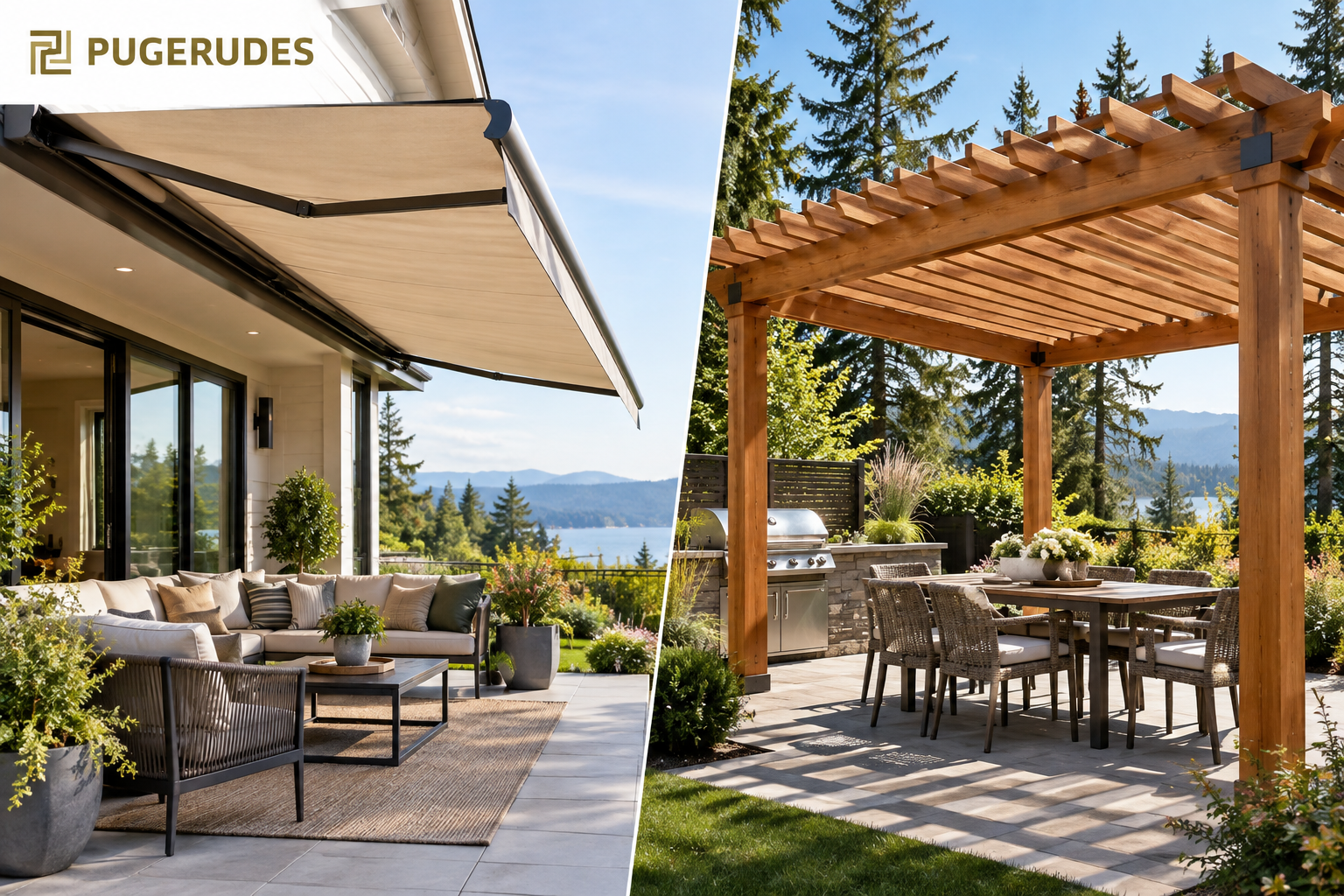
A retractable awning provides adjustable fabric coverage that can extend for shade and retract when you want an open patio. A pergola is a permanent outdoor structure that provides architectural definition and partial shade, with additional coverings often needed for greater sun or rain protection. For Washington homeowners, the better choice depends on desired weather flexibility, maintenance, available space, and how the patio will be used.
How Retractable Awnings Work
Retractable awnings provide shade only when you want it. The fabric canopy extends over a patio or deck and retracts when you prefer an open space. Depending on the system, operation may be manual or motorized.
That adjustability is one of their biggest advantages. You are not permanently changing the feel of the patio just to gain shade during the times you need it.
Homeowners considering this type of coverage can explore our retractable awnings page to see how these systems can become part of an existing outdoor living space.
How Patio Pergolas Work
Patio pergolas take a different approach. Rather than extending from the home only when needed, a pergola creates a permanent or semi-permanent structure using posts, beams, and an overhead framework.
Traditional pergolas provide partial shade, although modern designs can incorporate louvers, canopies, or other coverings that increase protection. They can also become a strong architectural feature that visually defines a patio as its own outdoor room.
If you are nearby and want to explore options in person, you can also visit our showroom at Kent and talk with our team about the needs of your space.
Here are seven practical differences to consider before deciding.
7 Factors to Compare Before Choosing
Shade Control
The first major difference in the awning vs pergola decision is how you control shade.
A retractable awning allows you to respond to the conditions. Extend it when the afternoon sun becomes uncomfortable, then retract it when you want more daylight or an unobstructed view above the patio.
A traditional pergola provides a more consistent overhead framework, but the actual amount of shade depends on the spacing and design of its roof or slats. Additional coverings may be necessary if substantial shade is the goal.
This distinction matters beyond the patio itself. The U.S. Department of Energy notes that exterior overhangs and sunscreens can effectively reduce unwanted solar heat gain through windows. In other words, well-planned exterior shading can influence comfort both outside and near the home's windows.
Washington Weather and Rain
Washington weather deserves special consideration when choosing outdoor shade solutions.
Washington State University describes the Pacific Northwest as having a wet winter and dry summer cycle, while also noting major differences in precipitation between areas west and east of the Cascades. That means there is no single outdoor solution that works exactly the same way for every Washington property.
A retractable awning provides useful flexibility because coverage can be extended or retracted as conditions change. However, it should not be treated as an all-weather roof. Retractable systems should always be operated according to manufacturer guidance, particularly during strong winds, heavy rain, or severe weather.
A pergola can offer greater permanent overhead presence, but rain protection depends on its design. An open traditional pergola is very different from a system fitted with a solid or adjustable roof.
Installation and Available Space
Your patio itself may help make the decision.
Retractable awnings are typically attached to an appropriate exterior mounting surface and extend outward over the patio. This can make them appealing when you want coverage without introducing posts into the usable patio or yard area.
Pergolas generally need their own structural supports and adequate space for posts and footings. For a large yard, that may not be a concern. On a smaller patio, those structural elements can have a greater impact on furniture placement, walkways, and sight lines.
A professional evaluation is important because mounting surfaces, dimensions, exposure, and structural requirements vary from one home to another.
Design and Architectural Impact
This is one area where pergolas have a clear appeal.
A well-designed pergola can become a focal point in a landscape. It gives an outdoor seating or dining area architectural definition and can make the patio feel more like a separate room.
Retractable awnings take a less permanent visual approach. When extended, the fabric adds color and coverage. When retracted, much of the patio remains visually open.
Neither approach is automatically better. If you want the shade system to become a prominent architectural feature, a pergola may fit your vision. If you prefer coverage that can visually step back when it is not needed, a retractable awning may be the better fit.
Maintenance
Both choices require care, but the type of maintenance is different.
A retractable awning requires appropriate care of its fabric, frame, and operating components. Keeping the canopy clean, allowing it to dry properly, and following the manufacturer's operating recommendations can help maintain its appearance and function.
Pergola maintenance depends heavily on the material and design. Wood, metal, composite materials, louvers, and added coverings can each have different care requirements.
For Washington homeowners, moisture exposure should be part of the conversation. Instead of asking which option requires no maintenance, a more useful question is which type of maintenance you are comfortable managing over time.
Seasonal Flexibility
The Pacific Northwest makes flexibility especially valuable.
Washington State University's description of the region's wet winters and comparatively dry summers helps explain why an outdoor space may have very different needs throughout the year. A patio that benefits from substantial shade on a bright summer afternoon may feel better completely open on a cooler day.
A retractable awning lets you make that choice as conditions change. A pergola remains part of the outdoor space throughout the year.
Fall can therefore be a useful time to evaluate what worked and what did not during the warmer months. Think about when the patio became too sunny, which areas were uncomfortable, and whether you would have preferred permanent structure or adjustable coverage.
Which Option Fits the Way You Use Your Patio?
This final question often matters more than any individual feature.
A retractable awning may be the better fit if you want:
- Adjustable shade that can be extended or retracted as needed
- An open patio when overhead coverage is not necessary
- Coverage without adding support posts to the patio
- A solution that works with an existing deck or outdoor seating area
- Greater day-to-day control over sun and shade
A pergola may make more sense if your priority is creating a permanent architectural feature or defining a dedicated outdoor room.
The best choice is not about finding a universal winner. It is about matching the structure to how you want your Washington patio to function.
Pergola or Awning? A Quick Comparison
| Factor | Retractable Awning | Pergola |
|---|---|---|
| Shade | Adjustable | Depends on overhead design |
| Retractability | Yes | Generally permanent |
| Patio Footprint | Typically no front support posts | Usually requires structural supports |
| Architectural Presence | Lower when retracted | Strong permanent feature |
| Weather Flexibility | High | Depends on roof or covering |
| Maintenance | Fabric and system dependent | Material and design dependent |
| Best Suited For | Flexible patio coverage | Defined outdoor living spaces |
Are Retractable Awnings Worth It for Washington Homes?
For homeowners who value adjustable shade, retractable awnings can be a worthwhile addition to an existing patio or deck.
Their main advantage is control. You can create coverage when direct sun makes the patio uncomfortable, then retract it when you want more daylight. You also avoid committing to a permanent overhead framework solely for shade.
At Pugerudes, we believe the decision should begin with the home rather than the product. Patio orientation, dimensions, mounting conditions, exposure, and the way your family uses the space all matter. That is why seeing the space and understanding your priorities is more useful than simply declaring that one outdoor shade solution is best for everyone.
Make Your Patio Work the Way You Want It To
A pergola can be an excellent choice when you want a permanent architectural feature that defines an outdoor room. A retractable awning can be a better match when your priority is flexible shade that responds to how and when you use the patio.
For many Washington homeowners, that flexibility is particularly attractive because outdoor conditions and seasonal needs change.
If you are still deciding between a pergola and retractable awning, Pugerudes can help you evaluate your patio, discuss your shade goals, and determine which solution makes sense for your home. Contact us to schedule a free consultation and start planning an outdoor space you can enjoy more comfortably.