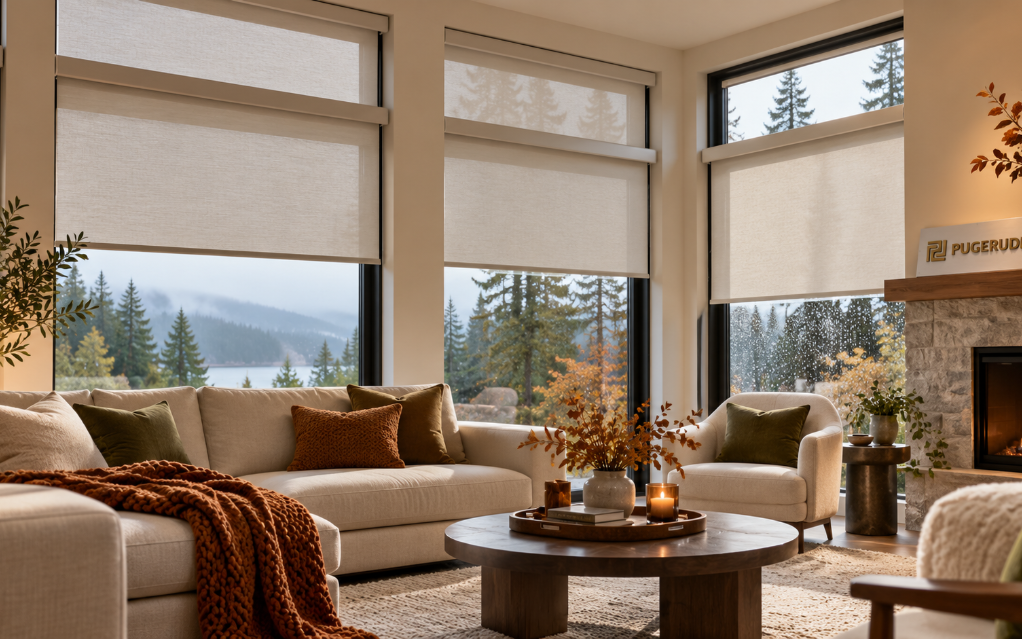
7 Energy-Efficient Window Treatments to Keep Federal Way Homes Warmer This Fall
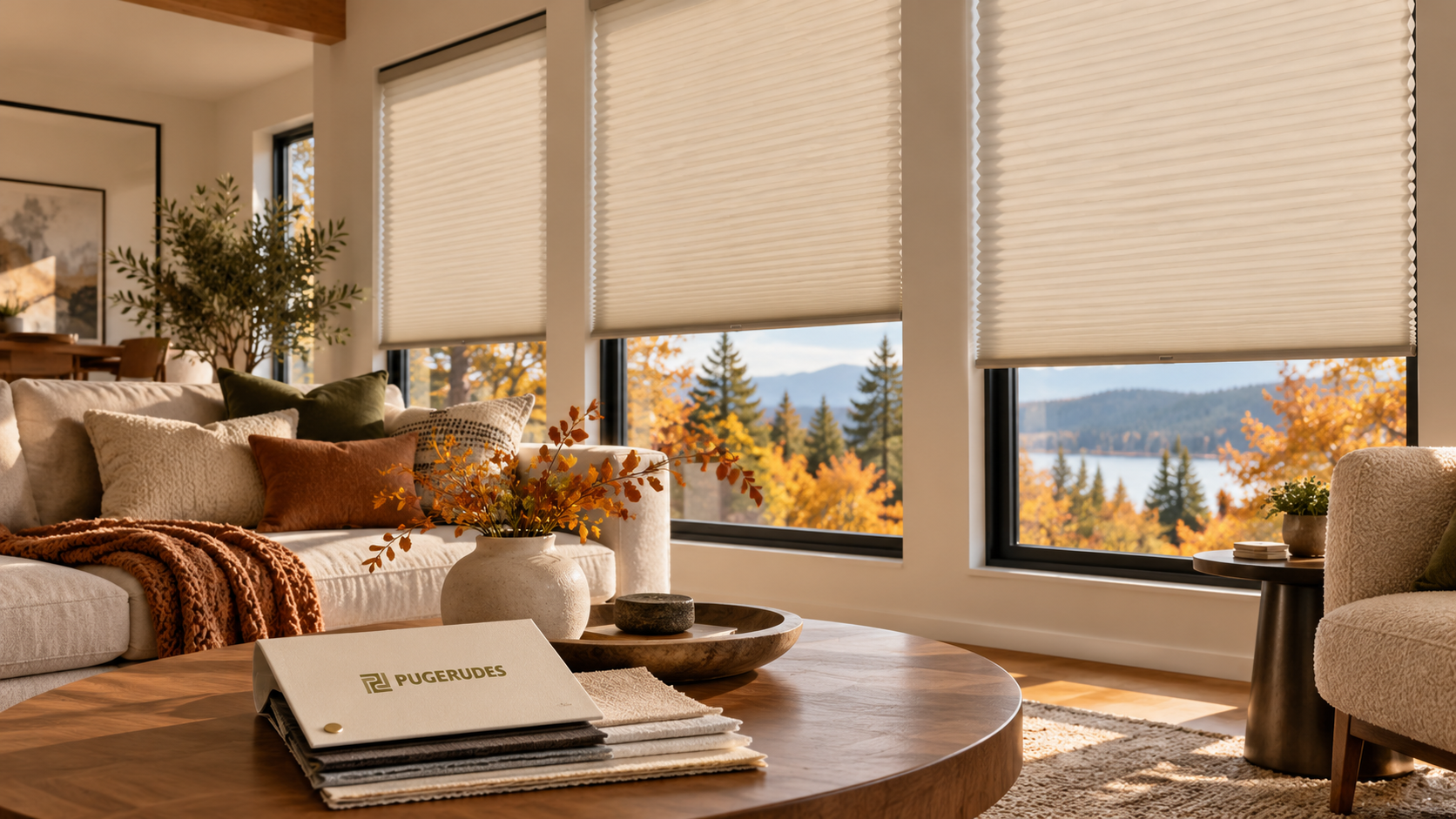
Fall in Federal Way brings cooler mornings, rainy afternoons, and chilly evenings. If you notice cold spots near your windows or rooms that are harder to heat, your window coverings may be part of the solution.
Choosing the right energy efficient window treatments can reduce heat transfer, improve comfort, and complement your home's design without replacing existing windows.
At Pugerudes, we help homeowners find custom window coverings that balance beauty and function. Through our window treatments services at Federal Way, we offer personalized recommendations and professional installation to prepare your home for colder weather.
Here are seven options worth considering.
Why Your Window Coverings Matter When Temperatures Drop
Windows provide natural light but can also contribute to unwanted heat loss. Even modern windows may feel colder than surrounding walls during Federal Way's chilly months.
Insulating window treatments create a barrier between the glass and your living space, helping reduce heat transfer and cold air movement near windows.
According to the U.S. Department of Energy, windows can account for 30% to 40% of a home's heat loss during winter. Installing energy efficient window treatments, particularly insulating cellular shades, can help reduce heat loss and improve indoor comfort during colder months.
When comparing energy efficient window treatments, consider insulation, fit, privacy, and lighting. Explore more
about shades and
about blinds to understand your options.
Window Covering Options That Support Better Winter Comfort
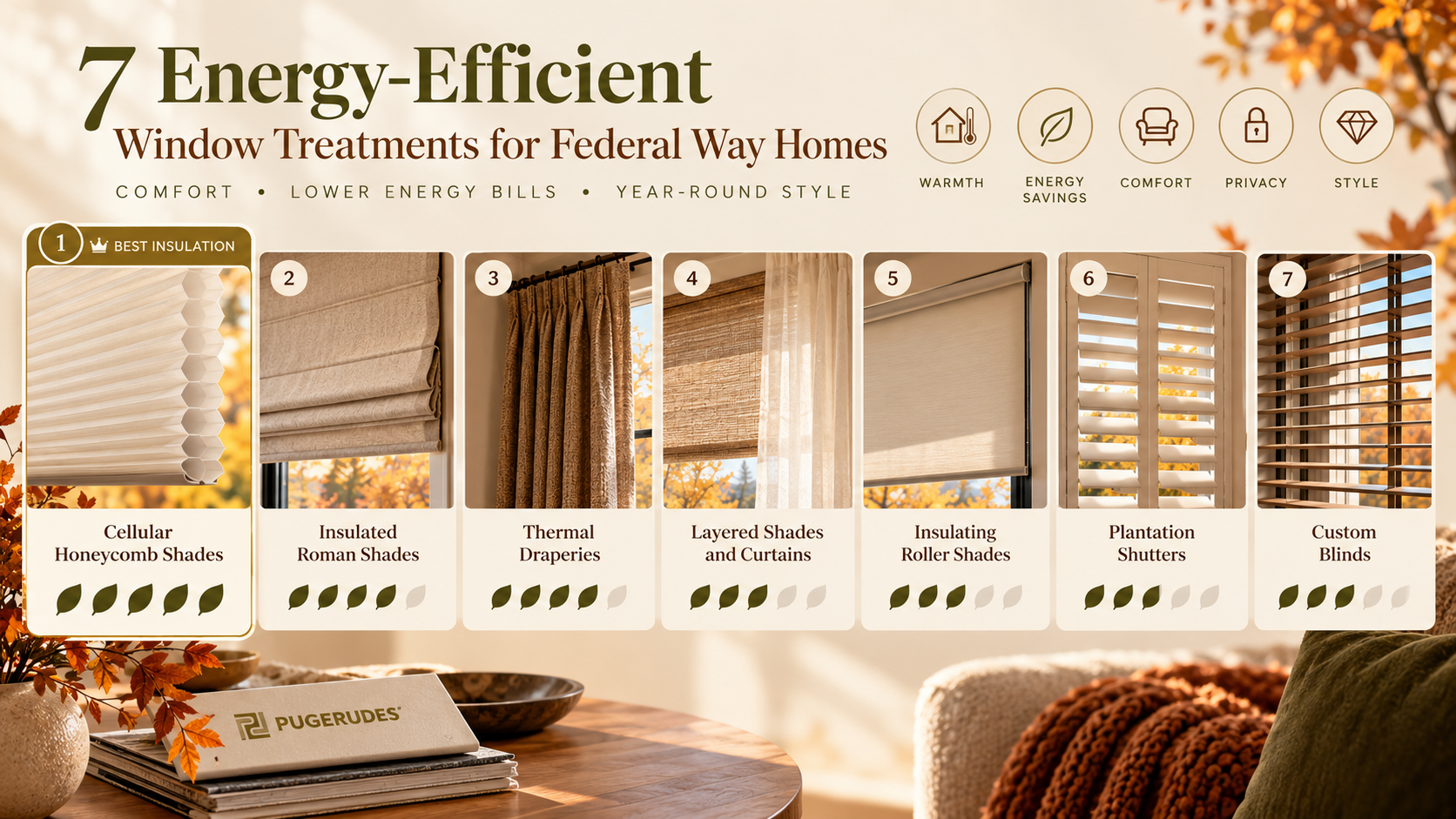
What Are the Most Energy-Efficient Window Treatments?
Cellular honeycomb shades are among the most energy efficient window treatments because their air pockets help reduce heat transfer. Insulated Roman shades, thermal draperies, and layered coverings can also improve comfort, depending on materials, fit, and installation.
Some window coverings are designed for insulation, while others balance comfort, light control, and style. Here are seven energy efficient window treatments worth exploring.
Cellular Honeycomb Shades for Winter Insulation
Cellular honeycomb shades are among the most effective insulating window treatments. Their honeycomb structure traps air, helping slow heat transfer between cold glass and your indoor space.
For homeowners comparing cellular shades for winter, insulating layers, fabric design, and fit are important.
At Pugerudes, we offer Hunter Douglas Duette® Honeycomb Shades, including options with advanced cellular construction for additional insulation.
These shades suit bedrooms, living rooms, and chilly windows while providing privacy and light control.
Explore more about cellular honeycomb shades to see available designs and features.
Insulated Roman Shades for Warmth and Style
Roman shades offer an elegant fabric appearance while adding coverage over your windows.
With suitable insulating materials or thermal linings, they can reduce heat transfer and improve comfort. Their soft folds work particularly well in bedrooms and traditional living spaces.
However, not every Roman shade provides substantial insulation. Fabric thickness, lining, and installation affect performance.
For homeowners seeking energy efficient window treatments without sacrificing style, insulated Roman shades offer a practical balance.
Thermal Draperies for an Extra Layer of Protection
Thermal draperies help improve comfort around large windows where cold glass can affect room temperature.
Unlike lightweight curtains, they typically feature heavier fabrics or insulating linings that provide additional coverage.
When properly installed and closed during cold evenings, they can help reduce heat transfer while adding warmth and texture to living spaces.
Choose draperies that extend beyond the window frame for better coverage and insulation.
Layered Shades and Curtains for Flexible Comfort
Layering fitted shades with curtains provides flexible light control and additional coverage when temperatures drop.
For example, light-filtering shades can provide daytime privacy, while curtains offer another insulating layer at night.
This combination works well in bedrooms and living rooms where comfort, lighting, and privacy matter.
Layered energy efficient window treatments also complement existing décor, although insulation depends on the materials and fit.
Insulating Roller Shades for a Clean, Modern Look
Roller shades offer a streamlined appearance and convenient operation. However, standard designs generally provide less insulation than cellular shades.
Specialized cellular roller shades combine a simple appearance with an insulating air-pocket structure.
These energy efficient shades suit contemporary Federal Way homes where minimal designs are preferred.
For homeowners comparing energy efficient window treatments, insulating roller-style products provide an attractive alternative to conventional shades.
Plantation Shutters for Durable Window Coverage
Plantation shutters add classic character while offering adjustable privacy and natural light.
Their solid panels and fitted frames create additional coverage when closed, potentially improving comfort.
Although shutters do not necessarily outperform cellular shades in insulation, they offer durability, convenient light control, and lasting visual appeal.
They are worth considering for homeowners seeking traditional or modern window designs with practical functionality.
Custom Blinds for Adjustable Light and Privacy
Custom blinds provide flexible sunlight and privacy control throughout the year.
Wood, faux wood, and other slatted blinds allow you to adjust daylight without completely raising the covering.
While conventional blinds offer less insulation than cellular shades, they remain useful for managing glare and privacy. Pairing them with curtains can provide additional coverage.
For homeowners researching Federal Way window treatments, blinds are practical when adjustable lighting and appearance are priorities.
How to Choose the Right Insulating Window Shades
The best energy efficient window treatments depend on your windows, budget, and everyday needs. Consider these factors before choosing:
- Window size and fit: Accurate measurements improve coverage and reduce unnecessary gaps.
- Insulating construction: Cellular designs and thermal linings generally outperform thin, unlined materials.
- Room requirements: Bedrooms may need room-darkening shades, while living areas benefit from flexible light control.
- Material and appearance: Select fabrics that complement your home's design and comfort needs.
- Daily operation: Convenient controls make it easier to close coverings during cold evenings.
Window coverings for cold weather work best when used strategically. Open shades during sunny periods to welcome solar warmth, then close them after sunset to help reduce heat loss.
Why Professional Measurements and Installation Matter
Even quality window treatments can underperform when their dimensions or mounting positions leave unnecessary gaps.
Accurate measurements help determine the right mounting style, while professional installation supports proper coverage and smooth operation.
When selecting energy efficient window treatments, we encourage homeowners to look beyond appearance.
At Pugerudes, we recommend custom window coverings suited to individual rooms, window shapes, lighting preferences, and insulation needs.
Our goal is to help you choose solutions that provide comfort and functionality throughout the year.
Bring More Warmth and Comfort Home Before Winter Arrives
Your windows deserve attention before colder weather settles into Federal Way.
From insulating honeycomb shades to elegant draperies and custom blinds, the right energy efficient window treatments can improve indoor comfort and complement your home's appearance.
At Pugerudes, we help homeowners compare window coverings and select personalized solutions that fit their spaces.
Ready for a more comfortable home this fall? Contact us today to request a free consultation and quote. Let us help you choose window treatments that combine comfort, function, and lasting style.
Frequently Asked Questions About Energy-Efficient Window Treatments
What window treatments are most energy efficient?
Well-fitted cellular honeycomb shades are among the most energy efficient window treatments because their air pockets reduce heat transfer. Insulated draperies and lined shades can also improve comfort depending on their construction.
Do cellular shades help insulate windows?
Yes. Cellular shades trap air inside honeycomb-shaped cells, creating an insulating layer between the glass and your room. Performance depends on design, coverage, and usage.
What window coverings help keep a house warmer?
Cellular shades, thermal draperies, insulated Roman shades, and layered coverings can reduce heat loss. Proper fit and closing coverings during cold evenings improve effectiveness.
Are blinds or shades better for insulation?
Cellular shades generally provide better insulation than conventional blinds. Blinds offer adjustable light control and privacy but typically provide less resistance to heat transfer.
Do window treatments help with drafts?
Insulating window coverings can reduce cold air movement near glass. However, they cannot repair actual air leaks around windows. Weatherstripping or sealing may be necessary.