Blinds vs. Shades: Which Works Better for Pacific Northwest Homes?
Quick Homeowner Guide
What's the Difference Between Blinds and Shades?
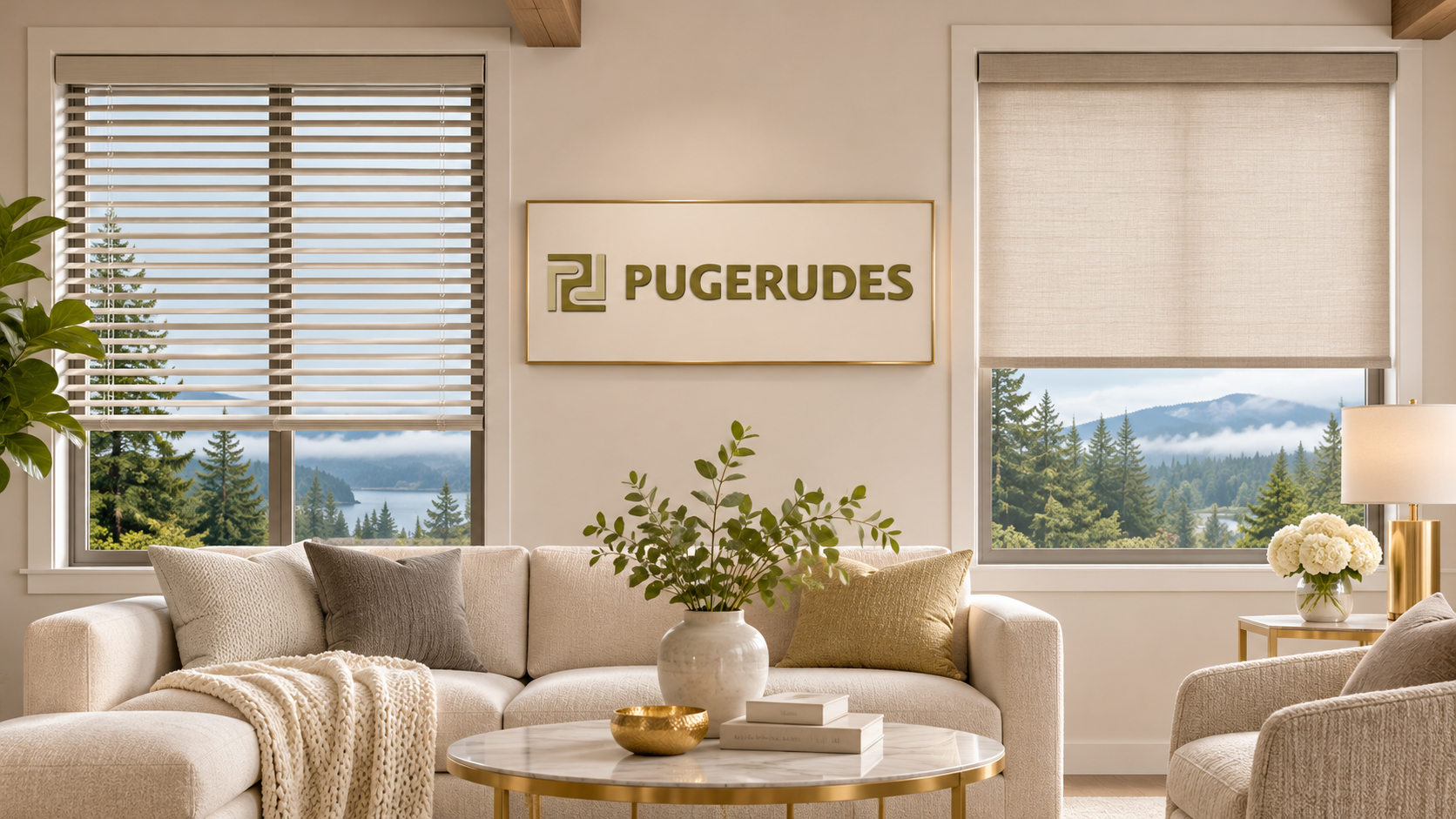
Blinds vs shades: Blinds use adjustable slats to control light and privacy, while shades use fabric or other continuous materials to cover windows. Blinds offer flexible light direction, while shades provide options for softer light, room darkening, and added insulation, depending on their design.
Choosing between blinds vs shades might seem simple until you consider how your windows affect daily comfort. In the Pacific Northwest, cloudy mornings can give way to bright afternoon sunlight, while cooler months make indoor warmth especially important.
Your window coverings should provide comfortable light, reliable privacy, and practical control throughout the year.
At Pugerudes, we've helped Western Washington homeowners find window treatments since 1956. We've learned that no single solution works for every window.
Let's compare seven important differences to help you decide.
Understanding What Makes Blinds and Shades Different
Blinds feature individual slats, typically made from wood, faux wood, or aluminum. You can tilt them to adjust sunlight and privacy without raising the covering.
Explore our blinds page to see how different materials and finishes complement your home.
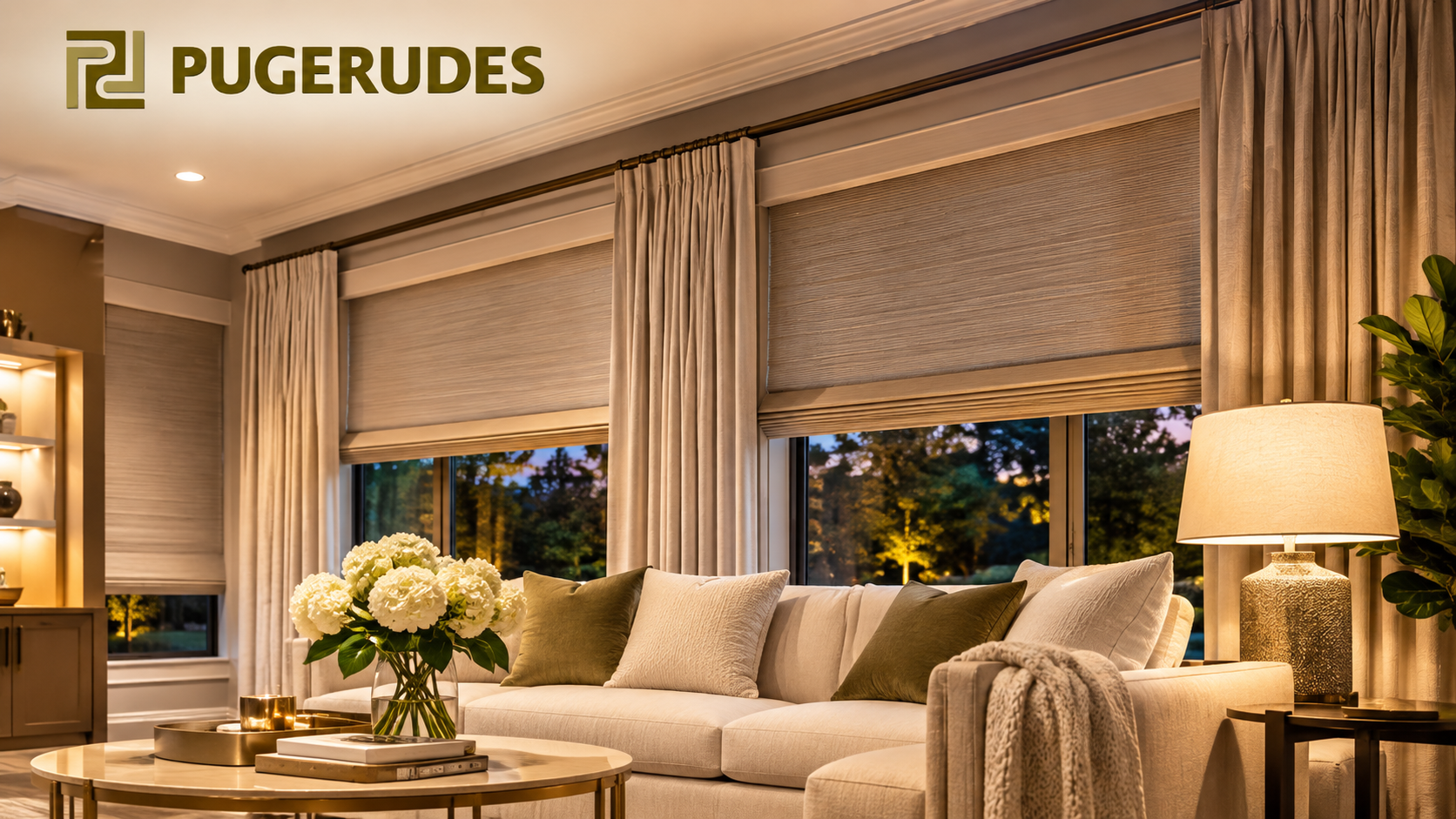
Shades use continuous fabric or woven material that raises and lowers. Popular styles include roller, Roman, cellular, and sheer shades, some with adjustable vanes.
Our shades page offers a closer look at these options.
When comparing blinds vs shades, the biggest difference isn't simply appearance. It's how each manages light, privacy, and comfort.
Key Differences That Matter for Pacific Northwest Homes
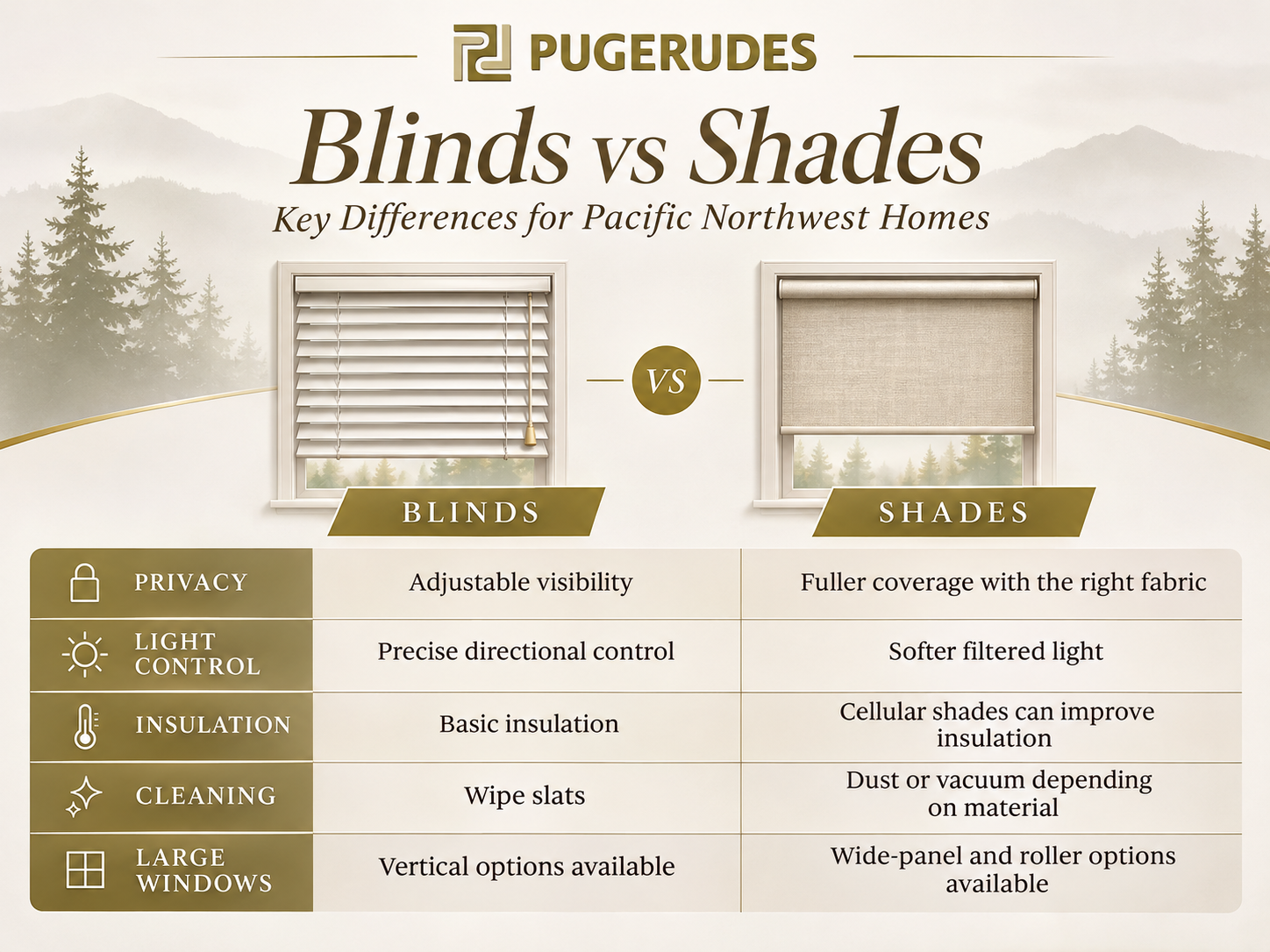
Evaluating blinds vs shades means considering everyday performance, particularly with the Pacific Northwest's changing weather and daylight.
Privacy: Which Keeps Your Home More Comfortable?
Privacy matters whether your windows face a street, neighboring houses, or shared outdoor spaces.
Blinds let you tilt slats to limit outside views while allowing natural light inside. This flexibility works well in living rooms and offices.
Shades provide different privacy levels depending on the fabric. Light-filtering materials soften sunlight but may reveal silhouettes at night. Opaque fabrics offer more complete coverage when lowered.
When comparing shades vs blinds for privacy, consider daytime and nighttime conditions.
Opaque shades may suit bedrooms and street-facing windows, while blinds offer more adjustable visibility.
Light Control: Managing Changing Northwest Sunlight
Pacific Northwest homeowners want natural daylight without uncomfortable glare.
Blinds provide flexibility through adjustable slats. You can redirect sunlight away from televisions or computers without covering the entire window.
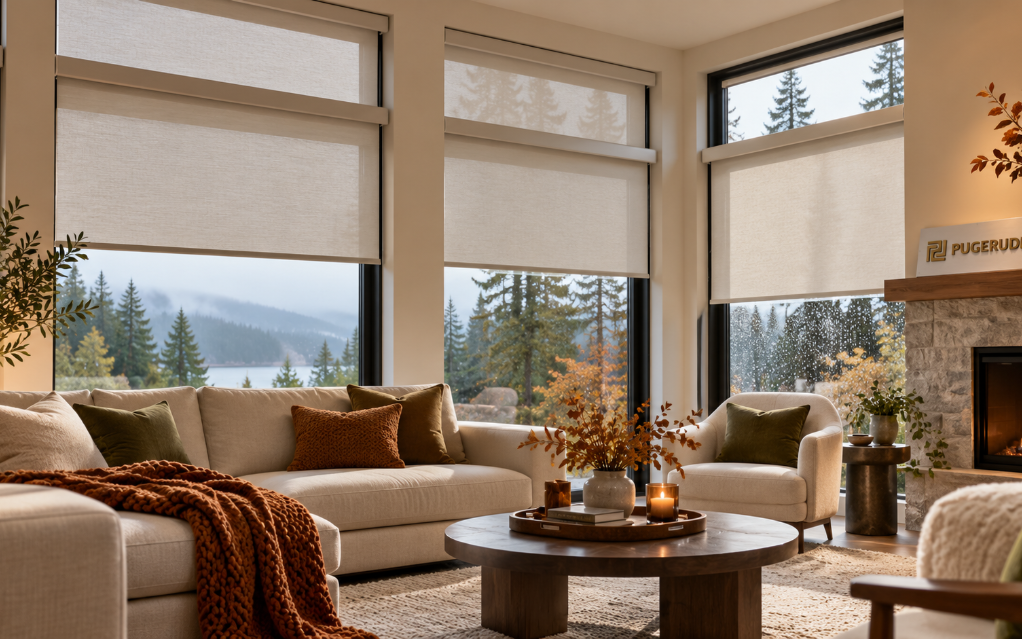
Shades offer different solutions. Light-filtering fabrics diffuse brightness, solar shades reduce glare, and room-darkening options limit incoming light.
In the blinds vs shades comparison, blinds excel at directing light, while shades create softer, more even illumination.
Your preference depends on whether you value precise adjustments or consistent light filtering.
Insulation: Which Helps Maintain Indoor Temperatures?
Poorly insulated windows can make rooms uncomfortable during colder months.
This makes shades vs blinds insulation an important consideration.
Conventional blinds provide limited insulation because air moves through gaps between their slats.
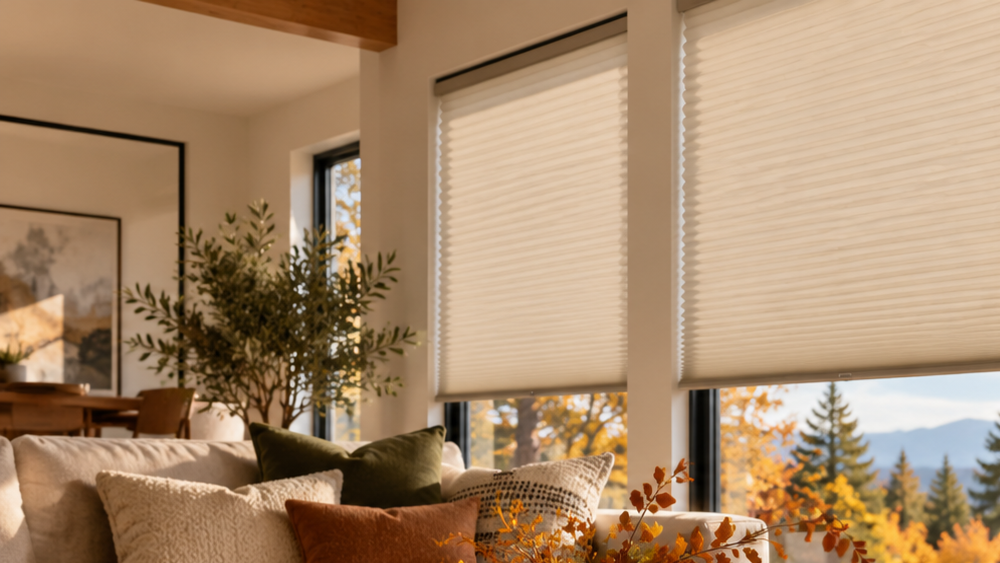
Cellular shades, also called honeycomb shades, feature fabric pockets that trap air and reduce heat transfer around windows.
According to the U.S. Department of Energy's research on cellular window shades, insulating cellular shades can improve building energy efficiency and indoor comfort by reducing heat transfer through windows.
For PNW homeowners concerned about winter heating, properly fitted cellular shades are worth considering. Performance depends on window conditions, construction, and usage.
Cleaning and Maintenance: Which Is Easier?
Nobody wants complicated window covering maintenance.
Blinds collect dust along individual slats, but faux wood and aluminum options can often be cleaned with regular dusting or a lightly dampened cloth, following manufacturer instructions.
Shades have fewer individual surfaces. Many fabrics require gentle dusting or vacuuming, while delicate materials need specialized care.
For kitchens and bathrooms, consider moisture-resistant options such as faux wood blinds or suitable shade materials.
When deciding between blinds vs shades, choose materials that match your cleaning habits and room conditions.
Large Windows: Which Handles Wide Openings Better?
Large windows and sliding doors can make window treatment selection challenging.
Traditional horizontal blinds may become heavy or inconvenient across wide openings.
Vertical blinds offer an alternative because their vanes move sideways, making them practical for sliding doors and large glass areas.
Explore our vertical blinds for customizable solutions.
Wide roller shades and other suitable shading systems can also work, depending on window dimensions.
For large-window blinds vs shades decisions, accurate measurements and comfortable operation are essential.
Style: Which Complements Your Interior?
Window coverings influence your room's overall appearance.
Wood and faux wood blinds introduce structured lines that complement traditional and contemporary interiors.
Shades offer different finishes. Roller shades create a streamlined appearance, Roman shades add softness, and woven materials introduce texture.
Consider how each coordinates with your furniture, flooring, and existing trim.
Some homeowners also prefer the architectural appearance of custom shutters.
Ultimately, blinds vs shades comes down to the design that best complements your home.
Motorization: Which Offers More Convenience?
Adjusting multiple windows daily can become inconvenient, especially when they're difficult to reach.
Fortunately, compatible blinds and shades can both be motorized.
Depending on the system, motorized coverings can operate through remotes, smartphones, or scheduled controls.
At Pugerudes, our motorized window treatments help homeowners manage light across multiple rooms.
When comparing blinds vs shades for smart-home convenience, evaluate each product's available automation features.
Choosing the Right Window Treatment for Each Room
We've found that homeowners often make better decisions when they consider individual rooms rather than selecting one covering throughout the house.
Here are practical recommendations:
- Living rooms: Adjustable blinds or light-filtering shades balance daylight and privacy.
- Bedrooms: Room-darkening or blackout shades help reduce unwanted light.
- Home offices: Tiltable blinds or glare-reducing shades improve screen visibility.
- Kitchens: Moisture-resistant blinds or suitable roller shades simplify cleaning.
- Bathrooms: Privacy-focused, moisture-resistant materials are important.
- Sliding doors and large windows: Vertical blinds or compatible wide-window shades offer practical coverage.
These recommendations aren't strict rules. Window size, exposure, and how you use each space can change your choice.
The best window coverings PNW homeowners select should accommodate their rooms' sunlight, privacy needs, and daily activities.
Make Every Window Work Better for Your Home
The blinds vs shades decision becomes easier when you prioritize what matters most.
Blinds offer adjustable light control and structured style. Shades provide various privacy, fabric, and insulating options, particularly cellular designs.
Neither is automatically better for every Pacific Northwest home.
At Pugerudes, we believe window treatments should fit the way you live. As a family-owned business serving Western Washington, we provide personalized design guidance, professional measurements, and installation services.
Ready to find the right window coverings? Contact us to schedule your free design consultation. We'll help you compare options and choose window treatments that bring lasting comfort and style to your home.
Frequently Asked Questions About Blinds vs Shades
What's the difference between blinds and shades?
Blinds use adjustable slats to control light and privacy. Shades use continuous fabric or material, offering options for light filtering, room darkening, and insulation.
Which gives more privacy, blinds or shades?
Opaque shades generally provide better coverage when lowered. Blinds allow adjustable privacy through their slats while admitting some natural light.
Are blinds or shades more energy efficient?
Cellular shades often provide better insulation than conventional blinds because their honeycomb structure traps air. Performance depends on the product, installation, and window conditions.
Which is easier to clean, blinds or shades?
It depends on the material. Faux wood and aluminum blinds are often easy to wipe clean, while many fabric shades need gentle dusting or vacuuming.
Can blinds and shades both be motorized?
Yes. Compatible blinds and shades can use motorized systems with remote or smart controls. Features depend on the selected product and manufacturer.