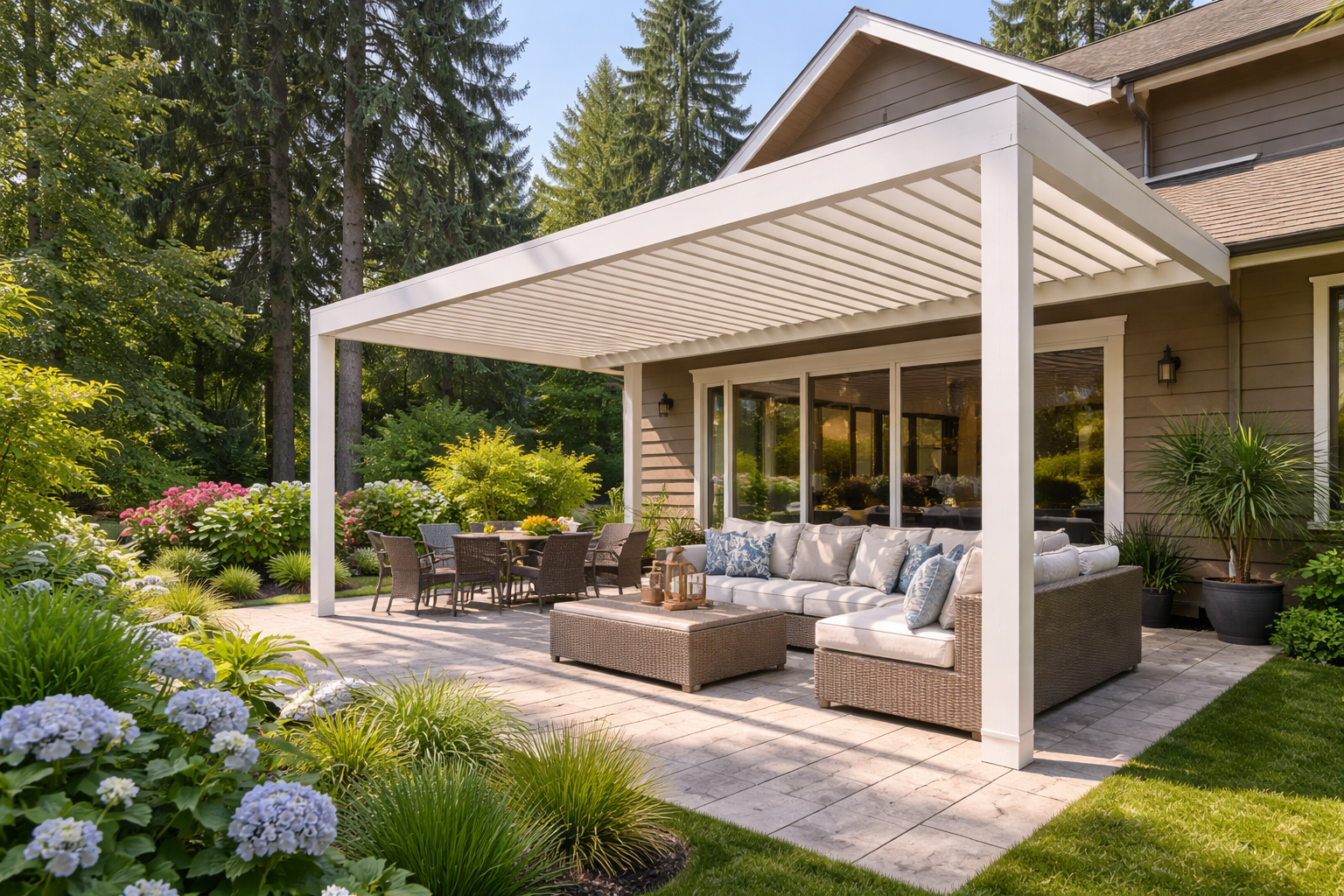
7 Best Outdoor Shades for Rainy Pacific Northwest Homes (That Actually Handle Heavy Rain)
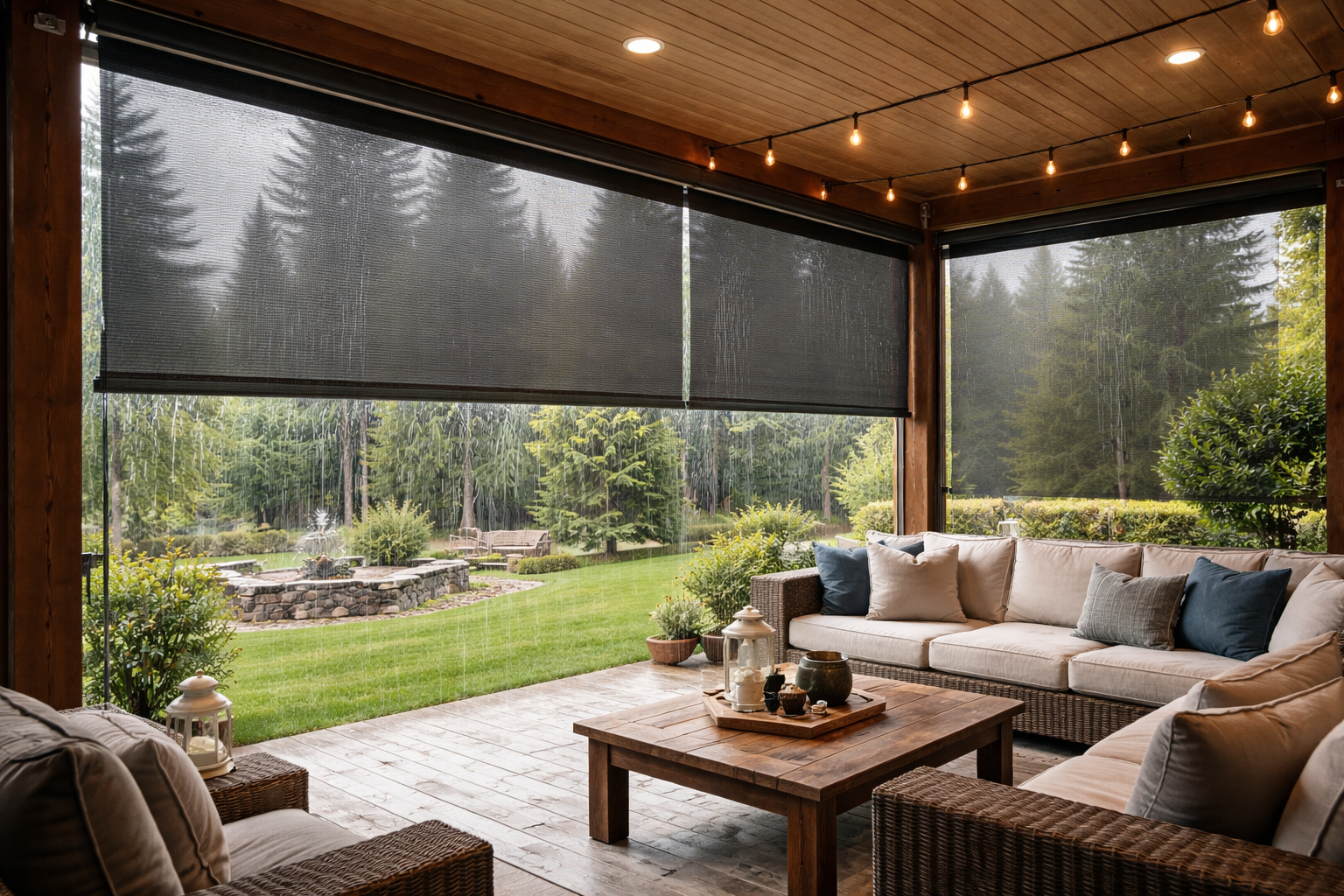
If you live in the Pacific Northwest, you already know this: rain isn’t just a season, it’s part of daily life.
One minute your patio feels like the perfect place to relax, and the next, you’re dealing with dripping fabric, sagging shades, or that stubborn mildew smell that never quite goes away.
At Pugerudes, we’ve worked with homeowners across Seattle, Tacoma, Olympia, and nearby communities who’ve run into this exact problem. Outdoor shades that look great at first often fall short when they’re not built for constant moisture, coastal air, and wind-driven rain. What should be a comfortable outdoor space quickly becomes something you avoid.
That’s why choosing the right outdoor shades isn’t just about appearance. It's about long-term performance, durability, and making sure your patio or deck actually works year-round.
We focus on solutions designed specifically for Pacific Northwest conditions, including premium systems like Hunter Douglas that are built to handle moisture without compromising style.
In this guide, we’ll walk you through what makes outdoor shades truly rain-ready, and the options that consistently perform best, so you can enjoy your outdoor space no matter how the weather turns.
Why Ordinary Shades Fail in the Pacific Northwest
Many outdoor shades are designed with sun protection as the primary goal. In dry states, that may be sufficient. In the PNW, it simply isn’t.
Constant moisture can cause fabric to stretch, sag, and lose tension. Standard hardware may corrode over time. Damp, shaded environments create ideal conditions for mold growth. According to the U.S. Environmental Protection Agency (EPA), mold can begin developing on damp surfaces within 24–48 hours if moisture is not properly controlled. That short window makes quick-drying materials and proper drainage essential in rainy regions like ours.
When exterior shades are not engineered for wet climate conditions, their lifespan shortens significantly. That is why we guide homeowners toward high-performance systems like our best exterior shades products, which are designed specifically to handle moisture exposure without compromising durability.
Understanding this difference often saves homeowners from replacing shades every few years.
What Makes Outdoor Shades Truly Rain-Ready?
Not all waterproof outdoor shades are created equal. The difference lies in materials, hardware, and installation.
Fabric selection is the first critical factor. Materials such as PVC-coated polyester and high-density polyethylene are engineered to repel water rather than absorb it. They dry quickly and resist microbial growth, significantly reducing mold risk. Limiting retained moisture is one of the most effective ways to prevent deterioration.
Hardware is equally important. Marine-grade stainless steel fasteners, corrosion-resistant aluminum brackets, and sealed motor housings protect against rust and mechanical failure. Proper tensioning prevents sagging, while thoughtful pitch ensures rainwater sheds instead of pooling.
When these elements work together, outdoor roller shades for rain can perform reliably year after year, even during long stretches of steady precipitation.
PVC-Coated Outdoor Roller Shades
PVC-coated roller shades remain one of the most dependable solutions for rainy climates. Their waterproof surface sheds water efficiently, and the reinforced fabric maintains tension even during sustained rainfall.
These shades provide strong defense against wind-driven rain while preserving a clean, contemporary look. Because the material dries quickly, it reduces the risk of lingering dampness that can cause staining or odor. When professionally installed, proper alignment and tension prevent sagging and encourage effective drainage.
For many PNW homeowners, this option offers the best balance between resilience and aesthetics.
Zip-Track Exterior Shades
Zip-track systems are especially valuable in areas exposed to wind. The fabric glides within enclosed vertical tracks, keeping it firmly tensioned and preventing movement during gusts.
In stormy conditions, this stability helps block rain more effectively than standard drop shades. By eliminating fabric gaps and flapping, zip-track shades minimize water intrusion and prevent pooling in loose sections.
Homes near waterfronts or in elevated locations often benefit most from this added reinforcement.
Many homeowners choose Hunter Douglas motorized outdoor shades for their sealed components and long-term reliability in wet climates.
Solar Screen Shades with Water-Resistant Weave
Solar screens are known for glare control and UV reduction, but certain water-resistant weaves also perform well in wet climates.
These fabrics allow airflow while repelling moisture, helping patios stay comfortable without trapping damp air. During warmer months, they reduce heat buildup. During cooler, rainy periods, they dry quickly and resist mildew formation.
For homeowners who want ventilation and outward visibility along with rain resistance, this is a versatile choice.
Clear Vinyl Rain Curtains
Clear vinyl rain curtains provide substantial protection while maintaining visibility. They are ideal for covered patios and screened enclosures where preserving the view matters.
Vinyl is naturally waterproof and easy to clean. When installed with correct tension and support, these curtains prevent pooling and maintain clarity over time. They are an effective way to extend patio use well into the rainy season without permanently enclosing the space.
Motorized Waterproof Outdoor Shades
Motorized shades offer more than convenience in rainy regions. They allow quick response when weather changes suddenly.
With a single touch, you can lower the shade before a downpour or retract it once conditions clear. Many high-quality systems use sealed housings and weather-rated components to protect internal mechanisms from moisture. While they are not designed for submersion, they are built to handle Pacific Northwest rain and humidity.
When installed properly, motorized rain resistant patio shades combine ease of use with reliable performance.
Retractable Patio Shades with Sealed Cassettes
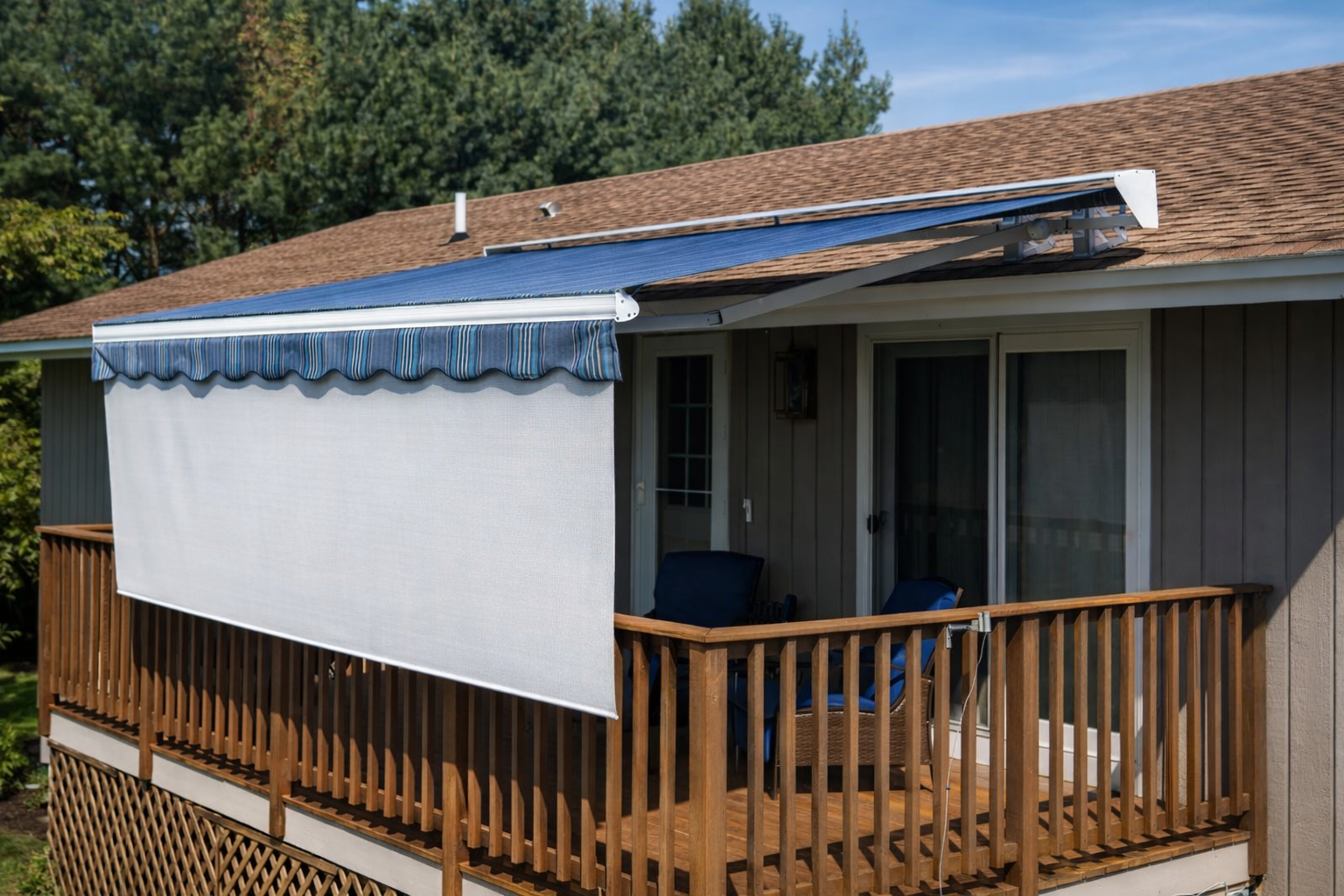
Retractable shades that close into a sealed cassette when not in use significantly reduce long-term exposure to moisture.
The protective housing shields both fabric and hardware from continuous dampness. Over time, this protection extends the life of the system and reduces maintenance concerns.
For homeowners seeking flexibility through changing seasons, cassette systems provide an added layer of durability.
Commercial-Grade Exterior Shades
Commercial-grade exterior shades are engineered for demanding environments such as restaurants and hospitality venues. That means reinforced hardware, heavy-duty fabrics, and stronger tension systems.
For residential properties exposed to consistent wind and rain, these systems offer exceptional strength.
Although they may involve a higher initial investment, their longevity often makes them the most cost-effective option over time.
We frequently recommend commercial-grade systems for homes in especially exposed areas. You can explore examples of our installations in our window treatment projects gallery to see how we tailor each solution to specific site conditions across the Pacific Northwest.
Do Outdoor Shades Get Moldy in Washington Weather?
This is a common and valid concern.
Low-quality fabrics that retain moisture are more likely to develop mold in damp climates. However, modern waterproof outdoor shades are engineered to dry quickly and resist microbial growth. Synthetic materials combined with proper tension and airflow dramatically reduce moisture retention.
Routine light cleaning and professional installation further minimize risk. With the right system, mold should not become an ongoing issue.
Are Motorized Outdoor Shades Waterproof?
Motorized outdoor shades are generally weather-rated rather than fully waterproof. This means they are designed to withstand rain and humidity but are not intended for immersion.
Quality systems feature sealed motors, protected wiring, and corrosion-resistant components. Proper mounting and drainage are what keep these systems operating smoothly year after year.
Selecting reliable products and ensuring professional installation makes all the difference.
Why Proper Installation Is Critical
Even the best exterior shades for wet climate use can fail if installed incorrectly.
Improper pitch can allow water to collect. Weak mounting may shift during windstorms. Inadequate sealing can lead to corrosion and premature wear. A shade system is only as reliable as its installation.
At Pugerudes, we evaluate exposure to rainfall, prevailing wind direction, and seasonal patterns before recommending a solution. Our approach ensures correct alignment, secure mounting, and proper drainage so your investment performs as expected.
Built for Rain. Designed for Living.
Outdoor comfort in the Pacific Northwest requires thoughtful design and materials that can truly handle moisture. The best outdoor shades resist water, limit mold risk, and endure wind-driven rain without sacrificing style.
If you’re ready to upgrade your patio or deck with waterproof outdoor shades built specifically for our climate, we would be honored to help. We design, customize, and install solutions that are made to last.
Contact us today for a free consultation and let’s create an outdoor space you can enjoy through every season.
Frequently Asked Questions
Can outdoor shades handle heavy rain?
Yes. When made from waterproof or water-repellent materials and installed with proper drainage, outdoor shades can withstand heavy Pacific Northwest rain.
What are the best outdoor shades for rainy climates?
PVC-coated roller shades, zip-track systems, and commercial-grade exterior shades are among the most reliable options for wet conditions.
Do outdoor shades get moldy in Washington weather?
They can if low-quality materials are used. High-performance synthetic fabrics and proper installation significantly reduce mold risk.
Are motorized outdoor shades waterproof?
Most are weather-rated and designed to handle rain and humidity, but they are not meant for submersion or extreme water exposure.