5 Kitchen Window Treatments That Handle Condensation and Cold Weather
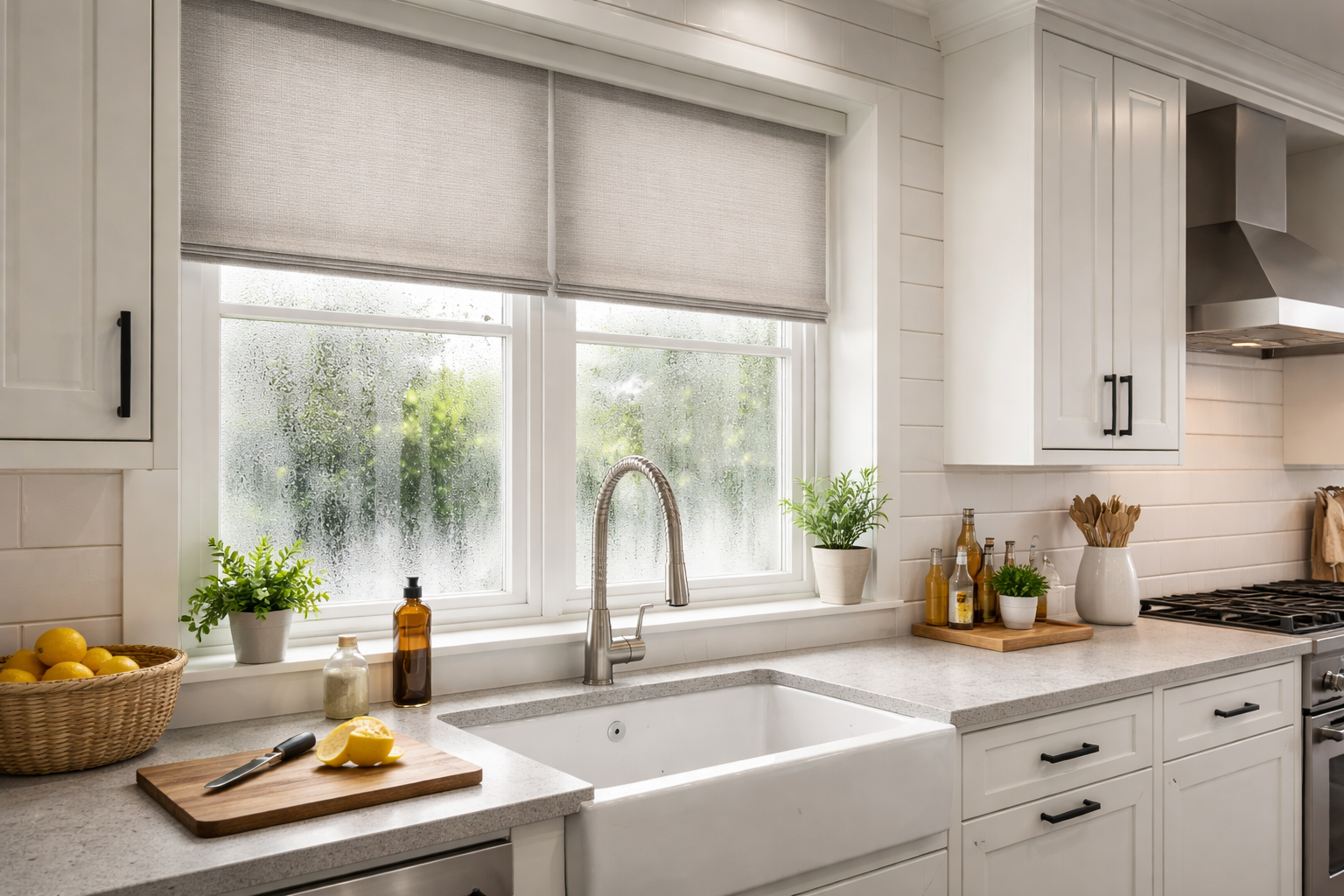
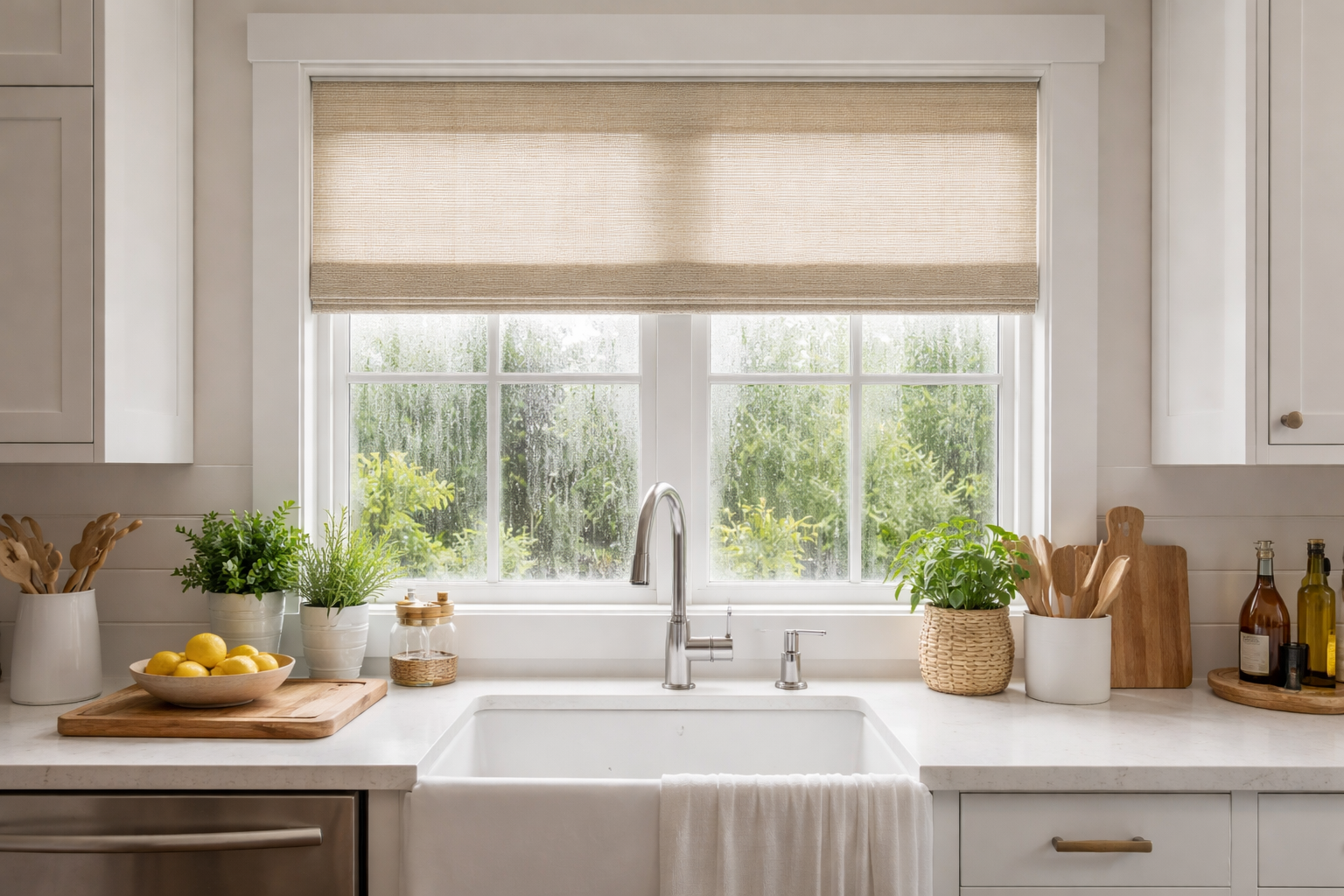
Have you ever stood at your kitchen sink on a cold morning, watching moisture drip down your windows like a tiny waterfall—and wondered if your window treatments are making it worse?
In the Pacific Northwest, where damp air and chilly temperatures are part of daily life, that isn’t just a minor annoyance. It’s a real problem that can lead to damage, mold growth, and a shorter lifespan for whatever shades or blinds you choose.
Kitchens in Burien, Des Moines, Kent, and Renton experience humidity from everyday cooking, washing, and even breathing, all of which increase indoor moisture levels. That moisture meets cold window glass and—boom—condensation. According to building science research, condensation occurs when warm, moist indoor air contacts cold surfaces like windows, and if it persists, can damage frames and finishes over time.
To help you enjoy a comfortable, healthier kitchen, this guide walks you through the best kitchen window treatments for handling condensation and cold weather. We’ll focus on moisture resistance, easy cleaning, insulation, and long-lasting performance—without sacrificing style.
Why Kitchen Window Treatments Matter in Cold, Moist Climates
Condensation isn’t just a cosmetic issue. When warm, humid air from cooking or washing dishes hits a cold window, tiny water droplets form on the glass and surrounding surfaces. Over time, that can lead to rot, peeling paint, and even mold growth—especially in regions with cold winters and frequent humidity.
Good window treatments in kitchens aren’t just about looks. They help manage moisture, resist warping or mold, and can enhance insulation to keep your space warmer and more comfortable.
Before we explore specific treatments, it’s worth noting a broader view of window performance in your region. For insights on climate-specific options beyond just kitchens, check out the guide on the best window treatments in PNW for 2026.
What to Look for in Kitchen Window Treatments
Choosing kitchen window treatments isn’t the same as choosing them for living rooms or bedrooms. In a kitchen, you want solutions that are:
- Moisture-resistant: Materials should stand up to cooking steam and humidity without warping or staining.
- Easy to clean: Kitchens can be messy environments; smooth surfaces and wipe-able finishes are best.
- Insulating: Treatments that add a layer of protection against cold glass help control condensation and keep heat in.
- Durable: With frequent use, your treatments should resist fading, sagging, and moisture damage.
Understanding these priorities will make your choice easier—and ensure you invest in treatments that look great and work hard.
Faux Wood Blinds: Durable and Moisture-Ready
For kitchens that need a classic, warm look without worrying about moisture damage, faux wood blinds are a standout choice. Unlike real wood, faux wood is engineered to resist warping, cracking, and swelling—perfect for a room with frequent steam.
These blinds are easy to clean (a quick wipe with a damp cloth often does the trick) and provide excellent control over light and privacy. Faux wood also won’t absorb moisture the way fabric or untreated wood can, making it a smart pick for spaces where condensation tends to gather.
Roller Shades Built for Kitchen Humidity
If you prefer a sleeker, modern aesthetic, roller shades are an excellent option. When selected with moisture-resistant fabrics, they perform beautifully in humid environments—making them a strong answer to the common question, can window shades handle moisture in kitchens?
Roller shades are typically installed inside the window frame, which helps create a tighter fit and minimizes gaps where cold air can sneak in. They’re also easy to clean, most just need a soft cloth wipe-down.
One thing to consider is fabric choice. Look specifically for moisture-resistant materials or vinyl-coated fabrics to reduce the chance of mold or mildew.
Vinyl Vertical Blinds for Wide Kitchen Windows
Kitchens with large windows or sliding doors can benefit from vinyl vertical blinds. Unlike horizontal blinds, vertical slats reduce surface area where condensation can cling, and vinyl is naturally resistant to moisture.
This makes them especially useful for areas near patio doors or breakfast nooks, where both humidity and cold drafts can be problematic. Vinyl blinds are easy to maintain, and many homeowners find that they stand up well over time—even in moisture-heavy kitchens.
For kitchens with large windows or sliding patio doors,
custom vertical blinds are a practical option that holds up well against moisture while allowing better airflow and easy cleaning.
💡 Pro tip: Vinyl’s smooth surface means you can clean spills and splatters in seconds with a damp cloth.
Aluminum Blinds: Simple, Strong, and Easy to Maintain
When it comes to resisting moisture without fuss, aluminum blinds hold their own. Aluminum doesn’t absorb water, won’t rust easily, and can take the heat and steam from stove-top cooking without warping.
Aluminum blinds also offer great control over light and privacy. Their sleek lines fit into modern and traditional kitchens alike, and because aluminum is so easy to clean, they’re a practical everyday solution.
Moisture-Resistant Cellular Shades for Insulation
Window condensation is caused when warm, moisture-laden air inside the home contacts cold window surfaces, a common issue in kitchens with high humidity.
According to the Cornell Cooperative Extension fact sheet on moisture condensation, reducing indoor humidity or improving the thermal quality of windows are key to controlling condensation and related problems like paint damage or mold risk.
However, in condensation-prone areas, standard cellular shades can sometimes trap moisture if closed all the time. To combat this, choose moisture-resistant fabrics and operate them strategically: open during the day to let condensation evaporate, or raise slightly off the windowsill to allow airflow.
Cellular shades can be a great option when you want insulation without sacrificing style—but be sure to choose the right configuration for humidity control.
Are Cellular or Roller Shades Better for Kitchens?
This is one of the most common questions homeowners ask when balancing light control, insulation, and humidity management.
Roller shades tend to handle moisture better simply because their simpler structure and smooth surfaces don’t trap water. They’re easier to clean and generally more moisture-tolerant.
Cellular shades, on the other hand, are excellent for insulation, especially in cold climates. If condensation is a frequent concern, look for moisture-resistant cellular fabrics and adjust their use so that they’re not closed tight all day.
Both options have value—so the best choice depends on your kitchen layout, humidity levels, and how you prioritize insulation vs moisture resistance.
How to Prevent Condensation on Kitchen Windows
Window treatments are one part of the solution—but you can also reduce condensation by:
- Improving ventilation with range hoods or exhaust fans.
- Using dehumidifiers to control indoor moisture levels.
- Keeping relative humidity between 30%–50% to minimize buildup.
- Wiping down windows after heavy cooking to remove excess moisture.
Remember, the goal isn’t just to cover condensation, but to manage moisture in your home.
Professional Selection & Installation Matters
Choosing the right treatments is half the battle. Even the best kitchen window treatments perform poorly if they’re not measured and installed correctly.
A custom fit ensures minimal gaps, better insulation, and a cleaner look overall. Professional installation also means expert advice on materials that stand up to humidity and cold—especially important in climates like Burien, Des Moines, Kent, and Renton.
If you’re unsure where to start, talk with a local expert who understands these regional challenges and can tailor solutions to your kitchen’s specifics.
Smart Choices for Moisture-Prone Kitchens
Kitchens are the heart of the home—but they’re also a hotspot for moisture, condensation, and cold drafts, especially in the Pacific Northwest. Choosing the right window treatments can make a tangible difference in comfort, durability, and even indoor air quality.
From durable faux wood blinds to sleek roller shades, moisture-resistant verticals, aluminum options, and thoughtfully chosen cellular solutions, there are excellent ways to balance performance and style in your kitchen.
If you’re ready to explore kitchen window treatments that truly work for your space, connect with our team at Pugerudes. We’re happy to help you find a custom solution that fits your kitchen, your climate, and your lifestyle—so you can enjoy a warmer, more comfortable kitchen year-round.
Frequently Asked Questions (FAQs)
What are the best window treatments for kitchen condensation?
The best treatments are moisture-resistant, easy to clean, and provide some insulation—like faux wood, vinyl verticals, aluminum blinds, and specially selected roller or cellular shades.
Can window shades handle moisture in kitchens?
Yes, especially when made with moisture-resistant fabrics and cleaned regularly.
Are cellular or roller shades better for kitchens?
Roller shades are often better for moisture resistance, while cellular shades offer insulation; the best choice depends on your priorities.
What materials are best for moisture-resistant kitchen window treatments?
Materials like vinyl, faux wood, aluminum, and moisture-treated fabrics resist warping and mold better than untreated wood or cloth.
How do you prevent condensation on kitchen windows?
Improve ventilation, use dehumidifiers, maintain moderate indoor humidity, and choose insulating, moisture-friendly treatments.
Are fabric window treatments a bad idea for kitchens?
Not necessarily, but they should be labeled moisture-resistant and easy-to-clean to prevent mold and staining.
Do moisture-resistant blinds still provide insulation in winter?
Yes, especially if fitted properly; some options, like cellular shades, are specifically designed for insulation.
Should kitchen window treatments be professionally installed?
Professional installation ensures proper fit, improved performance, and longer lifespan—especially in moisture-challenged spaces.